99% pure.
99% of what?
How to read a lab report: 5 checks, explained on sand.
99% of the peak area the lab instrument saw. Not 99% of the powder. Here's what that means.
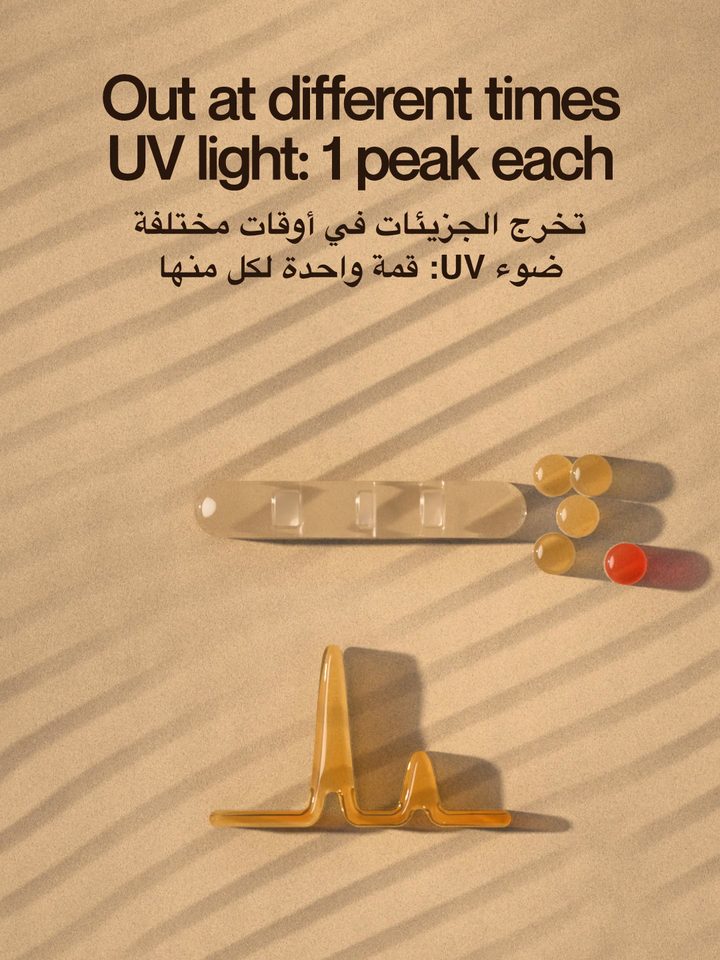
Each peak is one kind of molecule
In the most common purity test (HPLC), the sample runs through a packed tube. Each kind of molecule comes out at its own time, and a UV light sees each one as a peak. The tall peak is the molecule being tested. Small bumps are everything else.
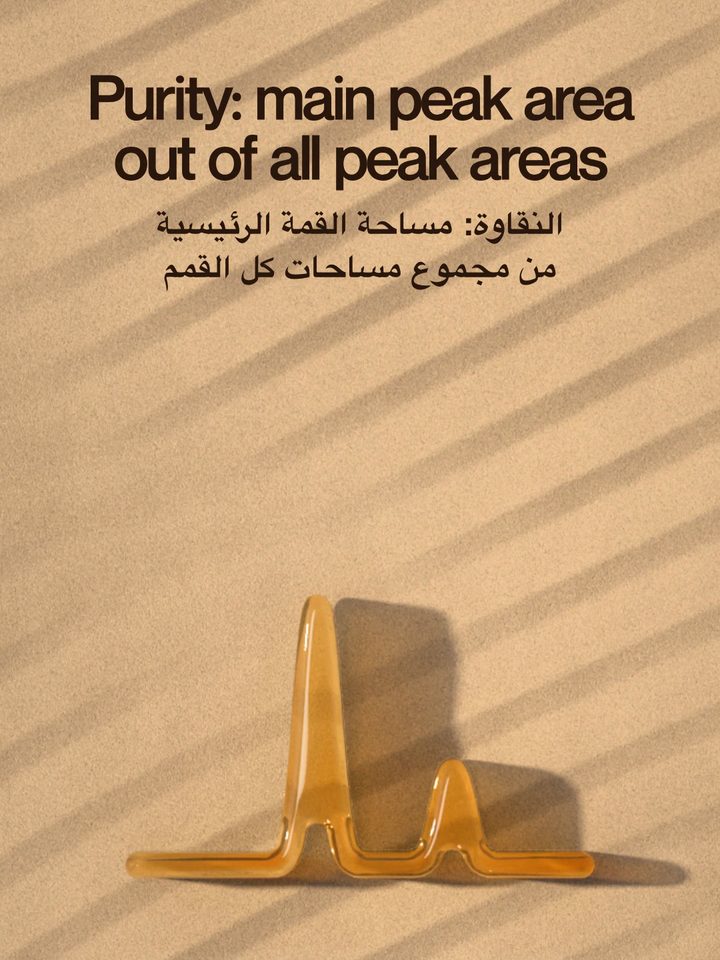
Purity is the main peak's share
The lab measures the area under every peak. Purity is the main peak's area out of all the peak areas added together. 99% means the main peak is 99% of that total.
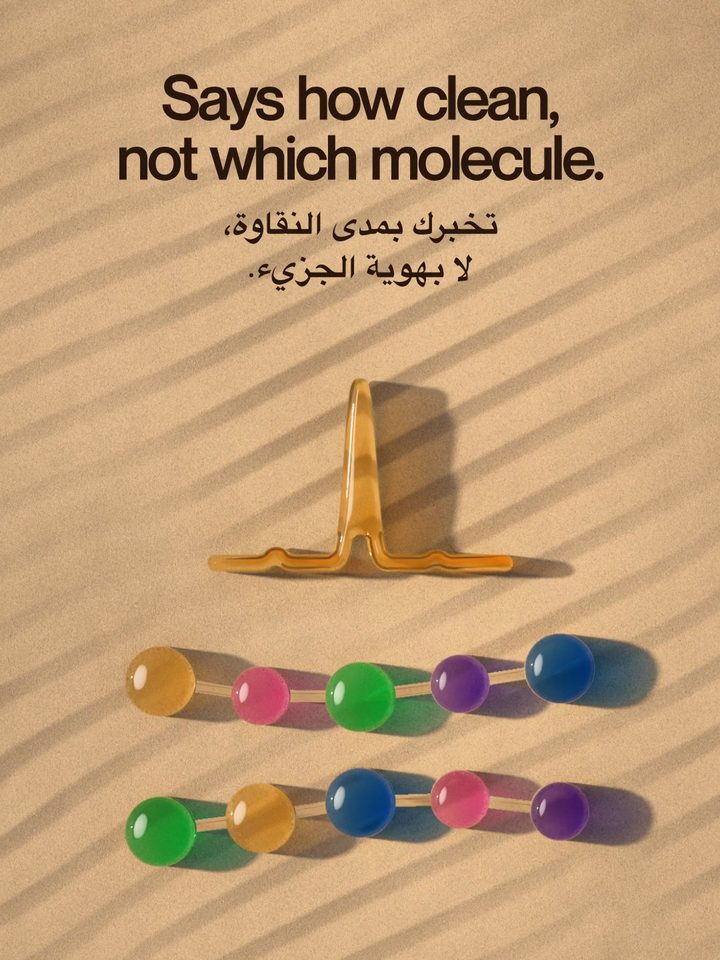
Clean isn't the same as right
Purity tells you how clean a sample is, not which molecule it is. Two different chains can both read 99%. A second test, mass spectrometry (MS), confirms the molecule by its weight.
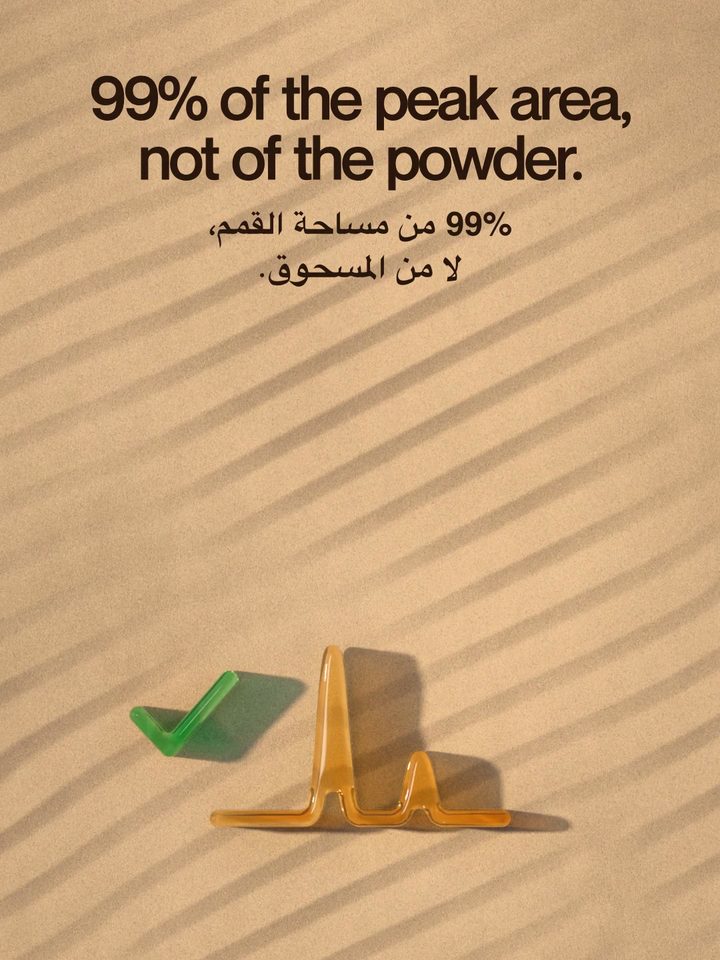
99% of the peak area, not of the powder
UV only sees what absorbs its light. Water and salts in a powder don't show up as peaks, so they're left out of the 99%. How much of the powder is the molecule itself is a separate test.
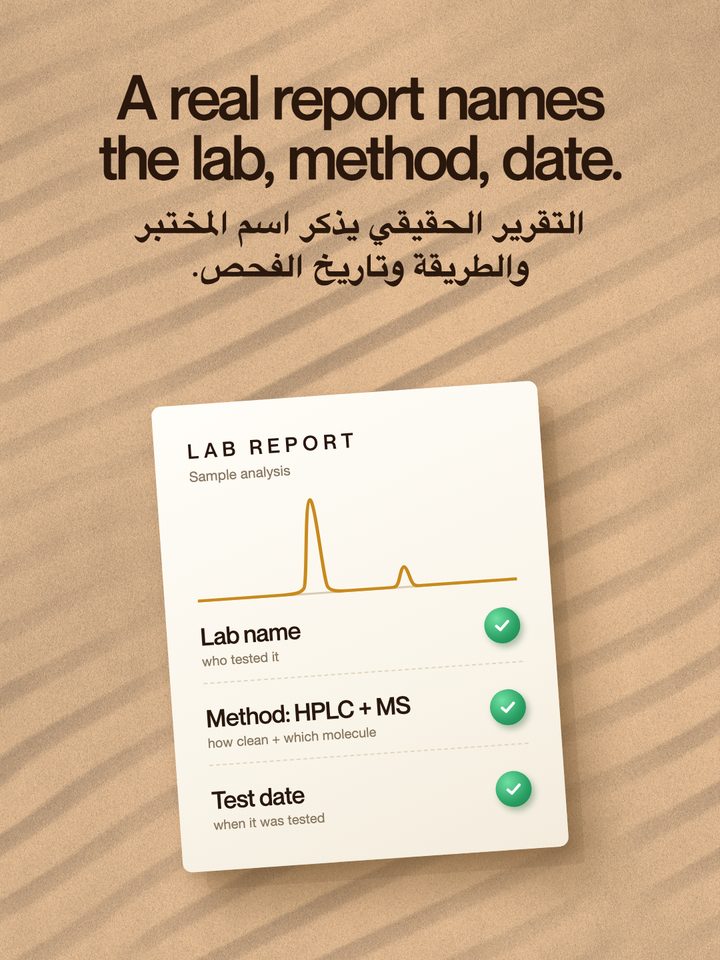
A real report names the lab, the method and the date
Look for who tested it, how (HPLC for purity, MS for identity) and when. If you can't see a report, ask for it.
The 5 checks in one look
- ✓One peak per kind of molecule
- ✓Purity = the main peak's share of all peak area
- ✓Clean isn't proof of identity: MS confirms it
- ✓99% isn't the amount: water and salts aren't counted
- ✓A real report: lab, method, date
What should we explain next?
Tap one. The most-picked becomes a video.